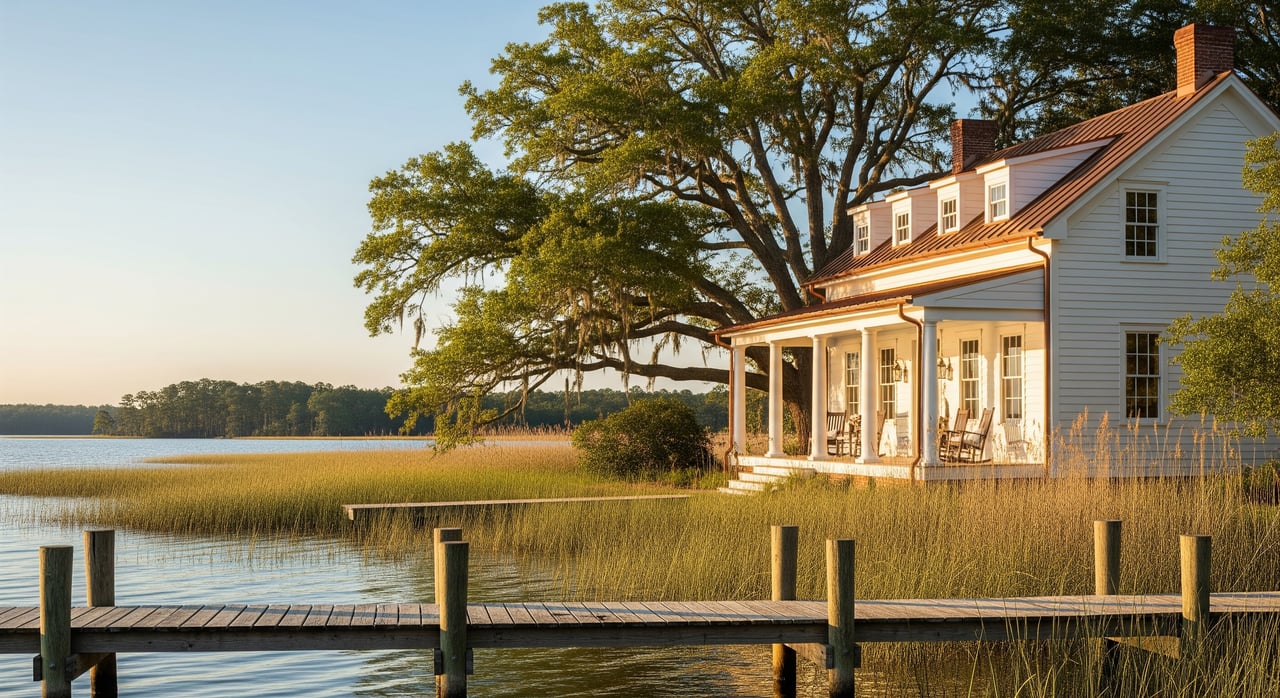
Have you been eyeing a storefront in downtown Plymouth or a farmhouse near Lake Phelps and wondering how to make the numbers work? If you own or plan to buy a historic property, tax credits can offset a meaningful portion of your rehab costs. You want to preserve character while keeping your budget in check. This guide shows you how to qualify and claim federal and North Carolina historic rehabilitation tax credits, what costs count, timelines, examples, and local steps. Let’s dive in.
Available tax credits near Lake Phelps
Federal 20% credit for income-producing buildings
The Federal Historic Rehabilitation Tax Credit provides a 20% income tax credit on qualified rehabilitation expenditures for certified historic structures used for income-producing purposes such as rental housing or commercial space. Projects must follow the Secretary of the Interior’s Standards and go through state and National Park Service reviews. Learn the basics on the National Park Service’s program page for Historic Preservation Tax Incentives.
North Carolina state credits
- Income-producing properties. North Carolina offers a tiered state credit that generally equals 15% of QREs up to $10 million and 10% for QREs from $10 million to $20 million, with possible bonus percentages for certain locations and sites. See the state overview at EDPNC’s Historic Preservation Tax Credit summary.
- Owner-occupied residences. For your personal home, North Carolina provides a 15% credit on eligible rehab costs, with a $10,000 minimum and eligible expenses capped at $150,000. The maximum credit is $22,500. Program details and forms are on the NC HPO owner-occupied tax credit page.
Tier 1 bonus in Washington County
Washington County is designated a Tier 1 county, which makes income-producing projects located there potentially eligible for an additional 5% state credit bonus up to the statutory limits. You can confirm county tier designations on the NC Department of Commerce county tiers page.
Check your eligibility
- Certified historic structure. Your building must be individually listed on the National Register of Historic Places or certified as contributing to a listed historic district. Review the NPS eligibility requirements.
- Plymouth Historic District. Plymouth includes a National Register-listed historic district. If your property is inside the district, NPS and the State Historic Preservation Office must confirm it is a contributing resource. See the listing on NPS NPGallery.
- Use type. The federal 20% credit applies to depreciable, income-producing buildings. Owner-occupied homes do not qualify for the federal credit, but they may qualify for the NC owner-occupied 15% credit noted above.
- Scope of work. Projects must be a substantial rehabilitation and follow the Secretary’s Standards. Pre-approval lowers risk of denial.
- Owner-occupied threshold. For the NC homeowner credit, there is a $10,000 minimum rehabilitation threshold and a cap on eligible expenses of $150,000, as outlined by the NC HPO.
Qualified costs and exclusions
Qualified Rehabilitation Expenditures usually include costs directly tied to rehabilitating the historic building’s structure and finishes. Items commonly excluded are acquisition costs, new additions that expand volume, site work or landscaping, and personal property like appliances or furniture. The IRS provides guidance on what counts as QREs on its rehabilitation credit page.
Application steps and timing
Step 1: Confirm historic status
If your building is not individually listed, submit Part 1 of the federal certification to confirm contributing status in a historic district. Review the NPS eligibility guidance.
Step 2: Get pre-approval before construction
Submit the proposed work for review using the NPS Historic Preservation Certification Application and the state forms. NPS describes the process and review timing here: application guidance and timelines. Application forms are available on the NPS certification application page. Complete submissions often see roughly 30 days at the state level and 30 days at NPS.
Step 3: Complete work and certify
Finish the rehabilitation consistent with the approved scope, then submit completion documentation for certification. Expect review fees tied to project cost. Keep dated photos, invoices, and clear cost breakdowns for QREs.
Claiming the credits and recapture
- Federal claiming. The federal credit equals 20% of QREs. You claim it using IRS Form 3468, and in many cases it is taken ratably over a five-year period. See the IRS rehabilitation credit guidance.
- North Carolina claiming. State credits may be taken in the tax year the structure is placed in service, and unused amounts can be carried forward for up to nine years. State rules and elections appear in Chapter 105 of the North Carolina General Statutes.
- Recapture risk. Disposing of the property or deviating from program requirements can trigger recapture or forfeiture. Good documentation, pre-approvals, and staying consistent with the Standards reduce this risk.
Local steps in Plymouth and around Lake Phelps
If your property is within the Plymouth Historic District, coordinate early with the State Historic Preservation Office and your design team. Confirm local building permits and any municipal review requirements before work begins. Properties near Lake Phelps can cross into Tyrrell County, so verify your exact county to confirm tier status and National Register context.
Examples: what the credits could look like
- Owner-occupied house in Plymouth. If eligible QREs total $50,000, the NC owner-occupied credit at 15% equals $7,500. The federal 20% credit does not apply to owner-occupied homes, as outlined by the NC HPO.
- Small income-producing rental in Washington County (Tier 1). With $500,000 in QREs, the federal credit equals $100,000 at 20%. The NC base credit equals $75,000 at 15%, plus a 5% Tier 1 bonus of $25,000, for a $100,000 state total subject to statutory limits. Federal claiming and timing follow the IRS rehab credit rules.
- Large adaptive reuse. For QREs up to $20 million, state percentages are 15% on the first $10 million and 10% on the next $10 million, with potential bonuses subject to caps. Always confirm exact eligibility, caps, and interactions with a tax advisor using the EDPNC summary.
Avoid common pitfalls
- Starting construction before Part 2 or state approvals. This can jeopardize eligibility. See NPS application guidance.
- Misclassifying costs like acquisition, additions, site work, or personal property as QREs. Review the IRS rehabilitation credit page.
- Skipping detailed documentation. Maintain dated photos, invoices, and clear scopes tied to the Secretary’s Standards.
- Overlooking state filing details. Track fee payments, carryforward elections, and which tax you will apply the state credit against in Chapter 105 of the North Carolina statutes.
Next steps and contacts
- Contact the NC State Historic Preservation Office for guidance and forms. Start with the owner-occupied program page and the broader program resources.
- Review the NPS certification application and process overview before you finalize plans.
- Plan your tax strategy using the IRS rehabilitation credit guidance.
If you are weighing a historic rehab near Lake Phelps or in downtown Plymouth and want help aligning the credits with your investment strategy, connect with Levi Bennett for a data-driven plan and local execution.
FAQs
Can you use the federal 20% credit on a personal home in Plymouth?
- No, the federal 20% credit is only for income-producing rehabilitations; North Carolina offers a separate 15% credit for eligible owner-occupied projects.
Does being inside the Plymouth Historic District automatically qualify my building for credits?
- Not automatically; NPS and the State Historic Preservation Office must confirm the property is a contributing resource or individually listed before you proceed.
How long do historic tax credit approvals usually take in North Carolina?
- When submissions are complete, plan for roughly 30 days at the state level and 30 days at NPS for Parts 1 and 2, plus additional time for final certification.
What paperwork should I prepare before hiring contractors for a historic rehab?
- Prepare measured drawings, before photos, a scope tied to the Secretary’s Standards, and cost estimates that separate qualified rehabilitation expenditures.
How does Washington County’s Tier 1 status affect state credits for income-producing projects?
- Tier 1 designation can add a 5% bonus to the state credit on eligible QREs up to statutory limits, increasing your total North Carolina credit.